
What Happens If You Buy a Car Without a Roadworthy?
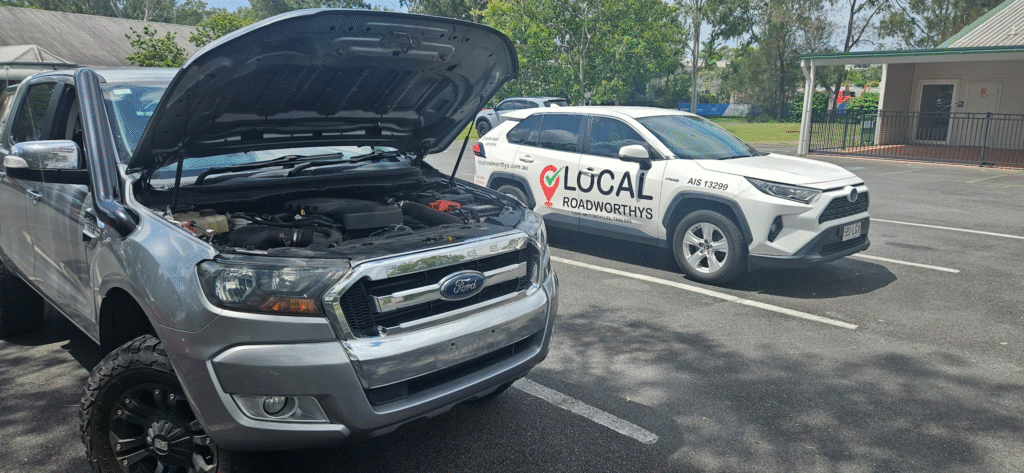
Last week I inspected a Ford Ranger in Yatala. The owner was a young man who had recently bought the car without a roadworthy certificate. He’d been told by the seller that the car would pass with flying colours. It didn’t.
What the inspection found

The Ford Ranger had around 300,000km on the clock. During the inspection I found three roadworthy fails:
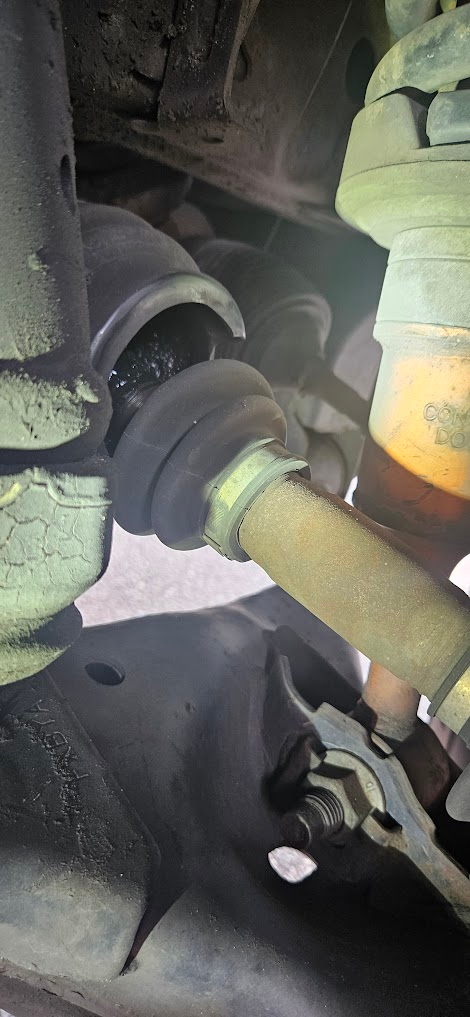
Damaged front inner CV boots – the rubber boots protecting the CV joints were split, allowing grease to escape and dirt to get in. Left unrepaired, this leads to CV joint failure.
Oil leak from the transmission – visible oil leaking from the gearbox. Any active oil leak fails a roadworthy.
Missing catalytic converter – the catalytic converter had been removed entirely. This is a fail and replacing a catalytic converter is not cheap.
I also noticed a strange noise coming from the transmission during the test drive. The transmission still functioned, so it wasn’t a roadworthy fail – the roadworthy only covers minimum safety requirements. But it’s the kind of thing that could become a very expensive problem down the track, and Ford Rangers with high kilometres are known for transmission issues.
The buyer was very disappointed when he heard the result. And this was just a roadworthy inspection – it didn’t even include a full mechanical assessment.

Why "no roadworthy" should be a red flag
If a car is being sold without a roadworthy, ask yourself why.
If the car is unregistered and sold without a roadworthy, that’s at least legal – the seller isn’t required to provide one. But it should still make you cautious. Why didn’t the seller get a roadworthy done? Possibly because they know it won’t pass, or the cost of repairs isn’t worth it to them.
If the car is registered and sold without a roadworthy, that’s even worse. In Queensland, selling a registered vehicle without providing a valid safety certificate to the buyer is illegal. A seller who’s willing to skip this legal requirement probably hasn’t taken other things seriously either – like servicing, maintenance, or honestly representing the car’s condition.
Either way, a missing roadworthy should make you slow down and think before handing over your money.
Roadworthy vs pre-purchase inspection - know the difference
A roadworthy inspection checks that the vehicle meets minimum safety standards. That’s it. It’s a pass or fail on safety items – brakes, steering, suspension, lights, tyres, leaks, and so on.
It does not cover the general mechanical condition of the vehicle. For example, brake pads have a roadworthy limit of 0.8mm – that’s extremely thin. Pads at 0.8mm will pass a roadworthy but should be replaced immediately. A roadworthy also won’t flag a strange transmission noise if the transmission still works, or a blown head gasket if the car still drives without leaking oil or producing excessive emissions.
A pre-purchase inspection goes much further. It covers everything in a roadworthy plus the overall mechanical condition – engine health, transmission behaviour, unusual noises, fluid conditions, service history assessment, and a general opinion from an experienced mechanic on the car’s condition and potential future issues.
If you’re spending serious money on a used vehicle – especially one with high kilometres or no roadworthy – a pre-purchase inspection is the smarter choice. It costs more than a roadworthy, but it can save you thousands in unexpected repairs.
How to protect yourself when buying
Get a pre-purchase inspection before you commit. Not after. Before you hand over the money. Local Roadworthys offers mobile pre-purchase inspections from $200. I come to wherever the car is – the seller’s house, a dealer’s yard, a car park – and go through the vehicle thoroughly. With over 10,000 inspections completed in the last 5 years, I can give you an honest, experienced opinion on what you’re about to buy.
If the seller refuses to let you get an independent inspection, walk away. A genuine seller with nothing to hide will have no problem with it.
If the vehicle doesn’t have a roadworthy, factor in the cost of getting one – including any repairs that might be needed to pass. A car that looks like a bargain can become very expensive very quickly once you add up the cost of a catalytic converter, CV boots, oil leak repairs, and whatever else is hiding underneath.
Don’t let the excitement of finding a car you like override common sense. Get it inspected first.