Leaking Fork Seals - Will My Motorcycle Fail the Roadworthy?

I inspected a Yamaha MT-03 in Daisy Hill today. The bike only had 20,000km on the clock but the fork seals were leaking. That’s a fail.
The owner was surprised – he thought 20,000km was too early for fork seal problems. But the cause wasn’t mileage. This bike had been parked outside in the rain for most of its life.
Leaking fork seals are a guaranteed fail
Yes, every time. There’s no grey area with this one. If I can see oil on the fork tubes, the bike fails.
Here’s why it’s a safety issue. The forks are your motorcycle’s front suspension. They absorb bumps, keep your front tyre in contact with the road, and play a critical role in braking. When the seals leak, oil escapes from the fork internals. Less oil means weaker damping, which means the suspension doesn’t work properly.
Weak front suspension leads to poor traction, reduced stability, and longer braking distances. On a motorcycle, where your front brake does most of the stopping, that’s serious.
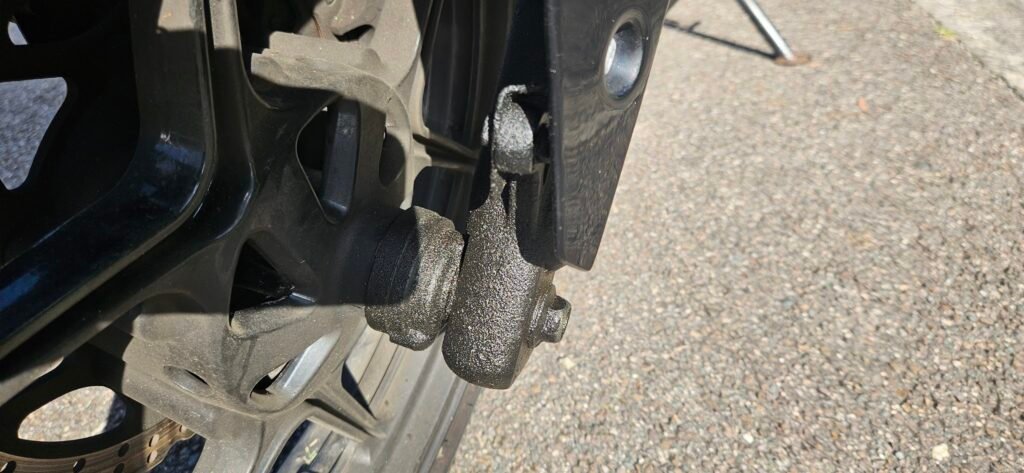
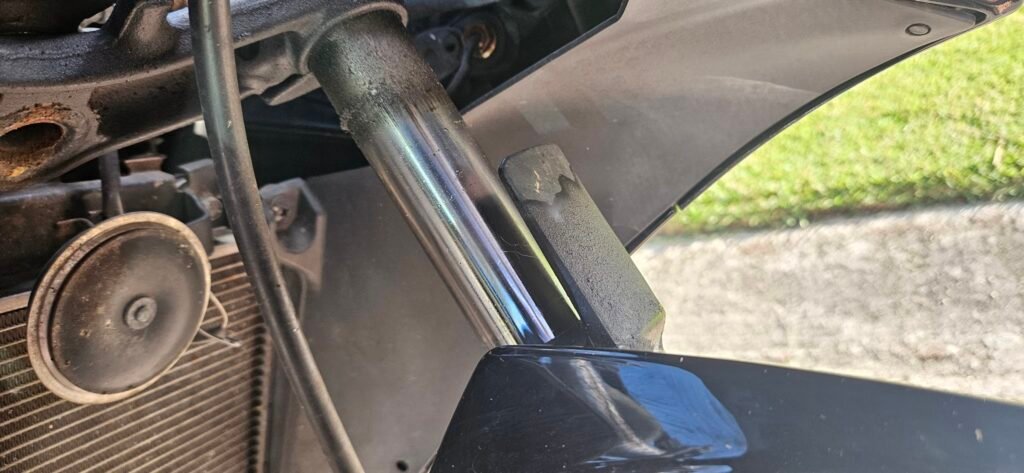
But it gets worse. The oil that leaks from the fork seals runs down the fork tubes – and gravity takes it straight onto the front brake. Oil on a brake disc or brake pads destroys braking performance. You can see in the photos how close the fork seal is to the brake caliper. It doesn’t take much leaking oil to contaminate the brakes.
What causes fork seals to leak?
The most common causes are:
Rust on the fork tubes. This is exactly what happened on this MT-03. The bike was parked outside, the chrome fork tubes developed surface rust, and that rust is abrasive. Every time the forks compress and extend – which is every bump, every brake application – the rough rusty surface grinds against the rubber seal. Eventually the seal gets damaged and oil starts leaking. If the fork tubes are rusted, simply replacing the seals won’t fix it long term. The tubes need polishing or replacement, otherwise the new seals will get damaged again.
Dirt and debris. Dirt, sand, and road grime can get between the seal and the fork tube. As the forks move up and down, the trapped dirt scratches and damages the seal. This is common on bikes ridden on dusty or dirty roads.
Age. Like any rubber component, fork seals deteriorate over time. Heat, sunlight, and age cause the rubber to harden and crack. Even a garaged bike with low kilometres can develop leaking seals if it’s old enough.
Impact damage. A stone chip or a small dent on the fork tube can damage the seal every time the fork passes over that point.

How to prevent fork seal problems
Clean your forks regularly. Wipe the fork tubes with a clean cloth after riding, especially if you’ve been on dirty roads. This removes grit before it can get under the seals.
Don’t park your bike in the rain long term. Occasional wet riding is fine, but a motorcycle that lives outside in Brisbane weather will develop surface rust on the fork tubes over time. A cover or a carport makes a real difference.
Check for early signs. A thin film of oil on the fork tube just below the seal is the first sign. If you catch it early, sometimes a seal cleaning tool can fix it without needing a full seal replacement. Once oil is visibly running down the forks, the seals need replacing.
How to spot it before your roadworthy
Look at the fork tubes – the shiny chrome section between the top and bottom of the forks. Run a clean finger along each tube. If your finger comes back oily, the seals are leaking.
Also check for oil residue on the front brake caliper and around the front wheel. If oil has made it down to the brakes, the fork seal leak has been there for a while.
If you see any oil on the forks, get the seals replaced before booking your roadworthy. It’s a guaranteed fail and you’ll save yourself the call-out fee for a re-inspection.