
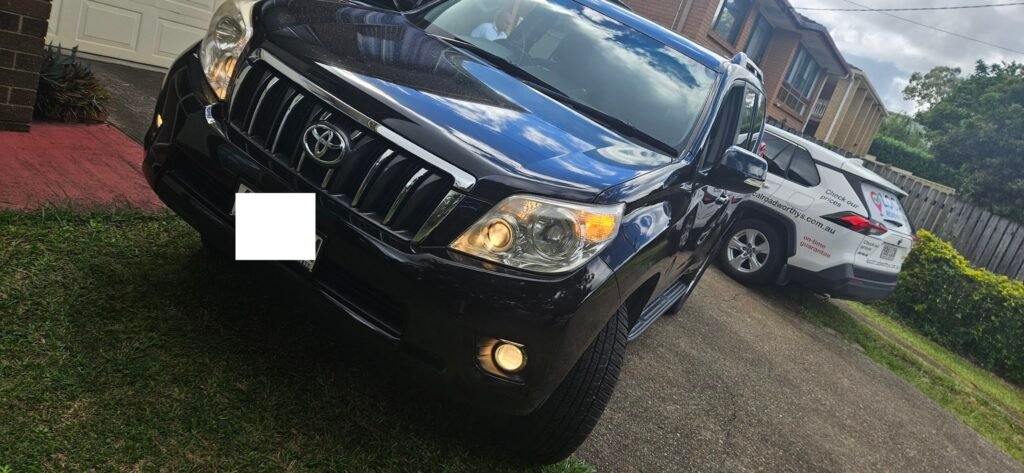
Mechanic Replaced Front Brakes But Missed the Rears - Failed Roadworthy

I inspected this Toyota LandCruiser in Mount Gravatt today. The owner told me it had just been at a mechanic who replaced the front brake pads and said everything else was fine. It wasn’t.
When I checked the rear brakes, there was zero friction material left on the pads. The metal backing plate was grinding directly on the brake rotor. Metal on metal.

The owner could hear the problem
I asked if he’d noticed anything unusual. He admitted he could hear a scraping noise when braking. That noise was the sound of metal grinding on metal at the rear – exactly what you’d expect with no pad material left.
The frustrating part is that he’d just paid a mechanic to look at the brakes. The front pads were replaced, but the rears were either not checked or not checked properly. I’ll admit the rear brake pads on this LandCruiser model are harder to see than on some cars, but that’s not an excuse for a mechanic to sign off on them as fine.
Why this is dangerous
Brake pads with no friction material left are not just a roadworthy fail – they’re a genuine safety hazard.
Metal on metal contact dramatically reduces braking performance. The car takes much longer to stop, especially in an emergency.
The brake rotor gets damaged by the metal backing plate grinding against it. What starts as a pad replacement can quickly become a rotor replacement too – a much more expensive repair.
Heat builds up rapidly from metal-on-metal friction. In extreme cases this can warp the rotor, damage the caliper, or cause brake fade where the pedal goes soft and the brakes lose effectiveness entirely.
If only the rear brakes are worn and the fronts are fine, the car brakes unevenly. Under heavy braking this can cause instability, especially in wet conditions.
How to check your brakes before a roadworthy
You can’t easily see brake pads on every car without removing the wheels, but there are warning signs:
Listen for any scraping, grinding, or squealing when you brake. Squealing often means the pads are getting low. Grinding means they’re gone.
Feel the brake pedal. If it feels soft, spongy, or travels further than normal before the car slows, something is wrong.
Pay attention during driving. If the car pulls to one side when braking, one side may be more worn than the other.
If you notice any of these signs, get the brakes checked by a mechanic before booking your roadworthy. Don’t assume they’re fine just because a mechanic recently worked on the car – as this LandCruiser proves, things get missed.
I don't fail cars for profit
I want to be clear about something. A large number of customers assume I fail vehicles to charge a call-out fee for the re-inspection. The opposite is true. The call-out fee for a re-inspection barely covers my fuel and travel time. I don’t make money from re-inspections.
I publish a free roadworthy checklist on my website specifically to help people pass first time. I’d rather inspect your car once, pass it, and move on to the next job. But I will not pass a vehicle that isn’t safe. That’s not negotiable.