Tesla Roadworthy Inspection in Brisbane - What You Need to Know

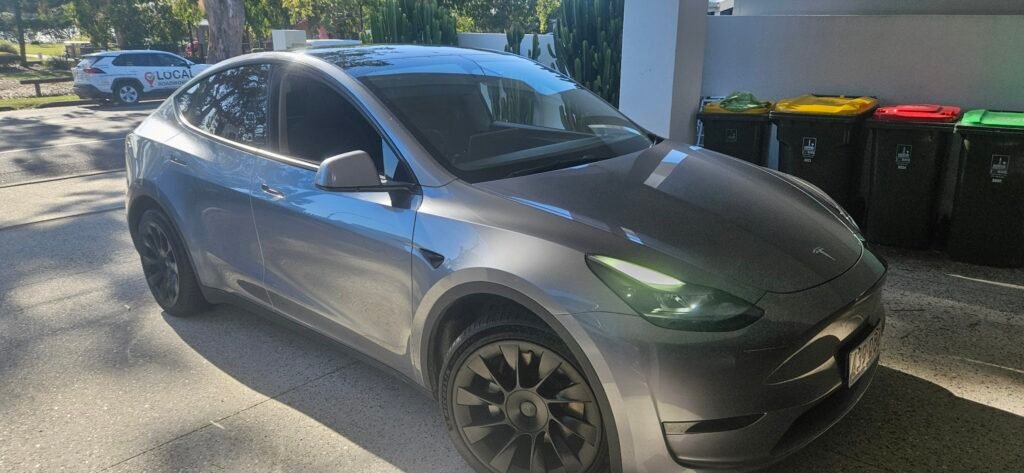
I inspected this Tesla Model Y in Lota today. Before I even started, the owner asked the question I hear from almost every Tesla owner – “have you ever inspected a Tesla before?”
I’ve done over 10,000 inspections. Yes, I’ve inspected plenty of Teslas. A Tesla gets the same inspection as every other car. Same checklist, same standards, same certificate. It’s just a car.
But Teslas do have their own common issues that I see regularly, so here’s what Tesla owners should know before booking a roadworthy.
Common Tesla fail points
After inspecting many Teslas, these are the issues that come up most often:
Worn tyres. This is the number one Tesla fail point. Electric motors produce maximum torque instantly, and that’s hard on tyres. Rear tyres on Teslas wear significantly faster than on equivalent petrol cars. I regularly see Teslas come in with rear tyres well below the 1.5mm minimum while the fronts still look fine. Check your rear tyres before booking.
Cracked control arm bushes. I see this on Model 3s and Model Ys at surprisingly low kilometres. I failed a Model 3 recently with a cracked front control arm bush at less than 40,000km. The weight of the battery pack puts extra stress on suspension components, and the bushes deteriorate earlier than you’d expect on a car of that age.
Leaking suspension. The shock absorbers on some Tesla models develop leaks earlier than on comparable petrol cars. Again, the battery weight is a factor. A leaking shock is a guaranteed fail.
Electronic doors not working properly. Tesla door handles and electronic door mechanisms must all work – from both inside and outside. On the Model X with its falcon wing doors, every door must open fully, stay open, and not fall or drift closed. Doors are a safety feature. In an emergency, passengers need to get out quickly, and people outside need to be able to open the doors to help. A door that won’t open, won’t stay up, or has a switch not responding is a fail.

What does NOT get checked
This is important for Tesla buyers and sellers to understand.
Battery health is not part of a roadworthy. I don’t test battery capacity, range, degradation, or charging performance. As long as the car drives normally and there are no fault codes on the screen, the battery is not a factor in the roadworthy.
A roadworthy certificate on a Tesla does not tell you anything about how healthy the battery is or how much range it has left compared to when it was new. If you’re buying a used Tesla and the battery condition matters to you – which it should – that’s a separate assessment outside of the roadworthy process.
General mechanical condition is not covered. A roadworthy is a basic safety inspection. It confirms the car meets minimum safety standards. It doesn’t tell you about overall condition, potential future problems, or whether the car is worth the asking price.
A Tesla is just a car
I understand that Tesla owners are attached to their cars and want to make sure the inspector knows what they’re doing. But a roadworthy inspection checks the same safety items on every car – tyres, brakes, suspension, steering, lights, wipers, seat belts, warning lights, underbody, and a test drive with a recorded brake test.
The fact that it’s electric doesn’t change what I check. There’s no exhaust to inspect, no engine oil to leak, and no transmission fluid to worry about. In some ways, the inspection is simpler on a Tesla than on a 15-year-old petrol car. But the suspension, tyres, brakes, and body are all checked the same way.
Tips before your Tesla roadworthy
Check your rear tyres. Measure the tread or look at the wear indicators. If they’re close to the limit, replace them before booking.
Check all doors. Make sure every door opens and closes properly from both inside and outside. Test the electronic handles and any automatic opening mechanisms.
Check for warning messages on the screen. Any active safety-related warning will fail the inspection.
Make sure you leave the key card for the inspector if it’s an unattended inspection. Phone-as-key doesn’t help when the owner isn’t there.