Nissan X-Trail Roadworthy Inspection in Brisbane - What to Check

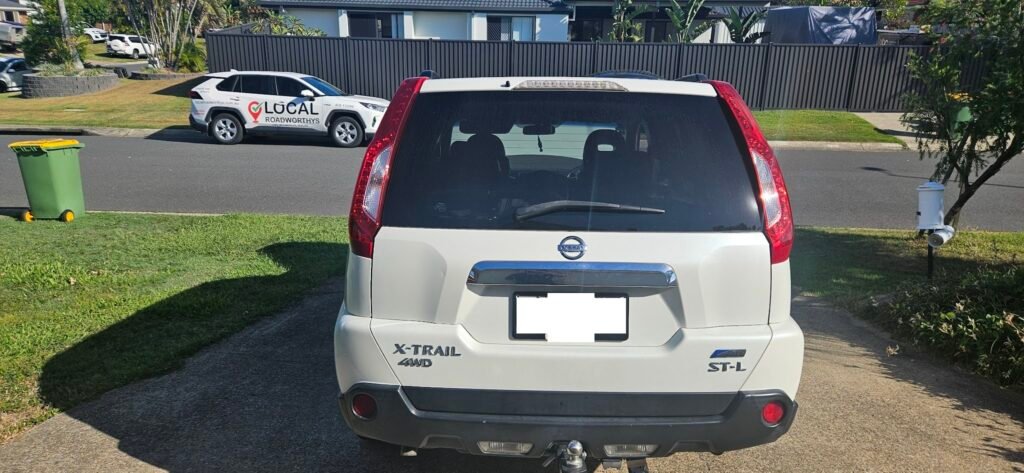
I inspected this Nissan X-Trail in Capalaba today. The X-Trail is one of the most popular SUVs in Australia and I see them regularly. They’re decent cars overall, but they have a few common weak points that are worth checking before you book your roadworthy.
CV boots - the number one X-Trail fail point
Split CV boots are the most common reason I fail Nissan X-Trails. The rubber boots covering the CV joints on the front axles deteriorate over time, especially on higher-kilometre examples. When the rubber splits, grease sprays out and dirt gets into the joint. Left unrepaired, the CV joint itself will eventually fail – a much more expensive repair.
Check underneath the car near the front wheels. If you see grease sprayed on the inside of the wheel, on the suspension components, or on the underside of the guard, a CV boot has likely split. You might also hear a clicking noise when turning at low speed, which is a sign the CV joint is already damaged.
A split CV boot is a guaranteed roadworthy fail. If you spot it before booking, get it replaced and save yourself the re-inspection call-out fee.

Control arm bushes
Cracked or worn control arm bushes come up on X-Trails, particularly on older models or those that have done higher kilometres. The rubber bushes deteriorate from age, heat, and constant use. Once they crack, the control arm has excessive play which affects steering precision, wheel alignment, and handling.
You can check the bushes yourself by turning the steering to full lock and looking at the rubber where the control arm connects to the chassis. Deep cracks or visible separation means they need replacing.
Oil leaks
Leaking rocker cover gaskets and other engine oil leaks show up on X-Trails from time to time. The rocker cover gasket sits on top of the engine and when it fails, oil weeps down the side of the engine block.
A slight oil film on the engine is usually acceptable – the engine doesn’t need to be spotless. But active drips hanging from the engine, oil on the exhaust, or oil dripping on the ground are all fail points. If your X-Trail has a known oil leak, get it fixed before the inspection.
The basics still apply
Beyond the X-Trail-specific issues, the standard fail points apply to every car:
Tyres – minimum 1.5mm tread depth across the full contact surface. X-Trails are heavier than small cars so tyres wear faster, especially if the car is used for towing or carrying heavy loads.
Lights – check every light on the car. A blown globe is the cheapest fix but one of the most common fail points.
Dashboard warning lights – start the car and make sure no safety-related warning lights stay on. ABS and airbag lights come up occasionally on X-Trails.
Brakes – listen for any squealing or grinding. If the pads are worn, replace them before booking.
Overall assessment
The Nissan X-Trail sits in the middle of the pack for roadworthy inspections. It’s not as bulletproof as a Toyota Corolla, but it’s a long way from the trouble I see on some European models. If the car has been serviced regularly and the CV boots are intact, it usually passes without too much drama.
Check the CV boots, look for oil leaks, and test the lights. Sort those out and you’re giving your X-Trail the best chance of passing first time.