220+ Five Star Reviews & Counting
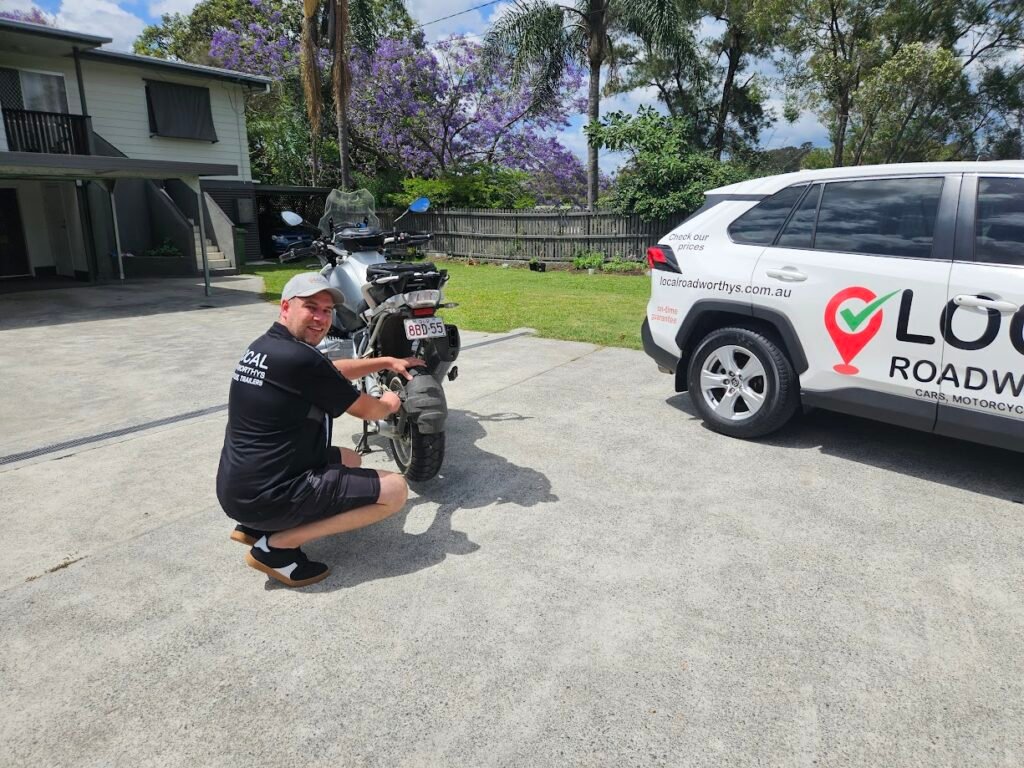
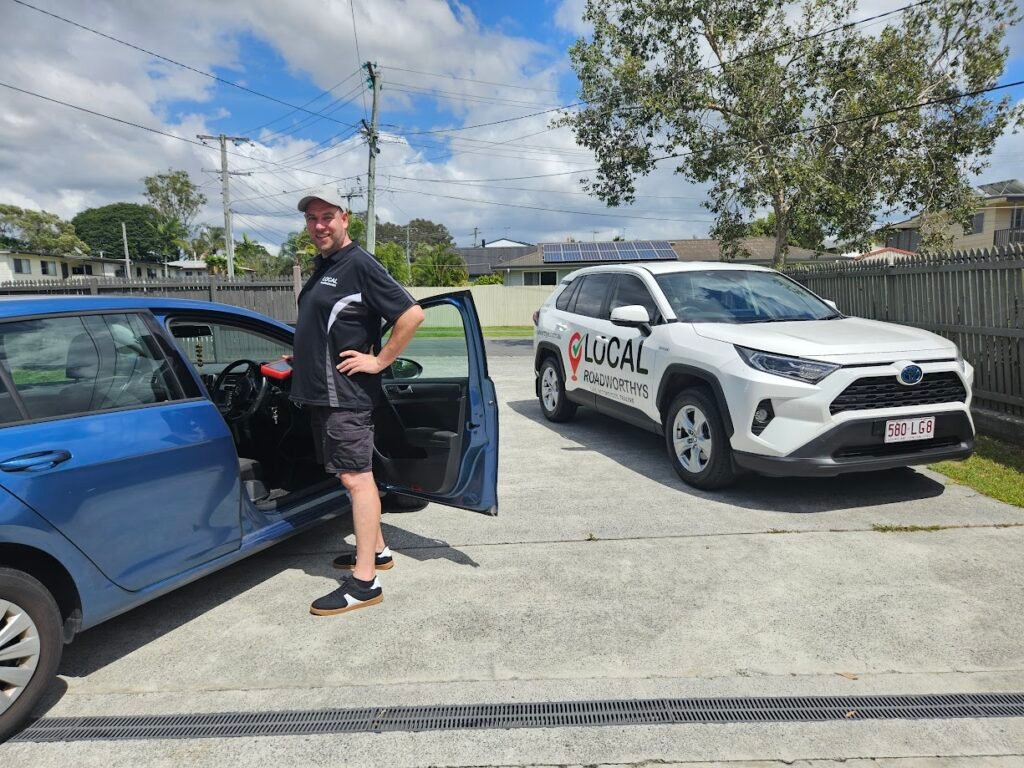
Need a roadworthy certificate for your car? I’m Dom, a licensed Queensland safety certificate inspector with over 10,000 vehicle inspections completed. I come to your home, work, or any location that suits you. The inspection takes about 20-30 minutes, and if your car passes, you get the certificate on the spot.
I only inspect – I don’t do repairs. That means there’s zero conflict of interest and no pressure to buy services you don’t need. You get an honest result, every time.
I inspect all cars up to 4.5 tonnes GVM, including sedans, hatchbacks, SUVs, utes, vans and 4WDs.
I inspect cars, motorcycles and trailers, in South Brisbane, Logan and Redlands and northern Gold Coast suburbs.
All prices include GST. No hidden fees, no card surcharges.
Book Online (recommended):
Book Over the Phone:
Re-inspections (within 2 weeks if your car didn’t pass): from $60.
Some areas are slightly higher – the booking page shows the exact price for your suburb.
In Queensland, a valid safety certificate (roadworthy certificate) is required in the following situations:
Selling a registered car – the seller must provide a valid roadworthy certificate to the buyer before the sale can be completed and ownership transferred.
Transferring ownership – if you’re gifting or transferring a car to a family member or friend, a roadworthy is required for the registration transfer.
Re-registering an unregistered vehicle – if your car’s registration has lapsed, you need a new roadworthy before you can re-register it with Queensland Transport.
Interstate transfer – if you’ve purchased a vehicle from another state and want to register it in Queensland, a Queensland roadworthy inspection is required.
Why You Should Get Your Roadworthy Before Listing Your Car for Sale
Text: A common mistake sellers make is waiting until a buyer is found before booking a roadworthy inspection. This can cause serious problems.
A car with a valid roadworthy certificate sells faster and for a higher price. Buyers see it as a sign that the car is in good condition and ready to go. You can mention in your ad that the roadworthy is ready – this attracts more serious buyers who are ready to purchase today.
If you wait until after the sale is agreed and the car then fails the inspection, you’re stuck. The buyer is waiting, you’re under pressure, and repairs need to happen urgently. I regularly see sellers in this situation – stressed, frustrated, and sometimes asking me to overlook issues because the car is “already sold.” That’s not something any licensed inspector can do.
There’s also a legal risk if you let the buyer arrange the roadworthy themselves. Until the transfer is completed, the car is still in your name. Any tolls, fines, or incidents during that period are your responsibility.
Getting the roadworthy done first puts you in control. The car is ready, the certificate is in hand, and when a buyer shows up with the money, the transfer can happen immediately – even online the same day if the car is registered.
A car roadworthy inspection in Queensland covers all safety-critical components. Here’s what I check during the inspection:
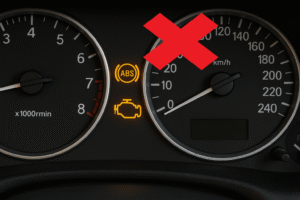
Dashboard warning lights – start the car and check the dash. If any orange warning light stays on while the engine is running, the car cannot pass. This is one of the most common fail points.
Horn – must work properly.
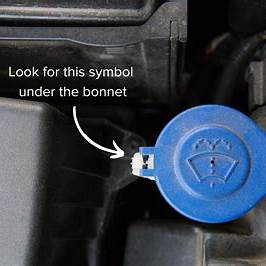
Windscreen wipers and washer – the front wipers must clear the glass without leaving streaks. The washer must spray fluid onto the windscreen. The rear wiper and washer are not part of the roadworthy inspection.
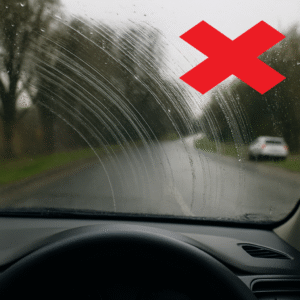
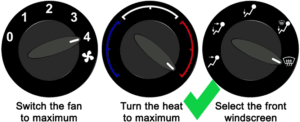
Interior fan/blower – the cabin blower must work and must be able to demist the front windscreen using hot or cold air. Air conditioning is not required, but the fan itself must function on at least the highest speed setting.
Windows – the driver’s window must work. At least 50% of all windows must be operational. For example, in a 4-window car, the driver’s window plus one other must work. Window tint must be clear – blurry, bubbly, or excessively dark tint will fail.
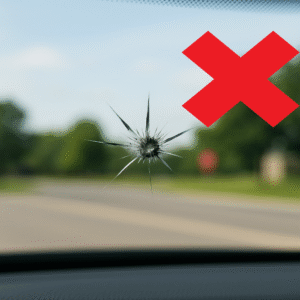
Windscreen – must be free of chips in the driver’s direct line of sight. Large chips or cracks elsewhere on the windscreen will also fail.
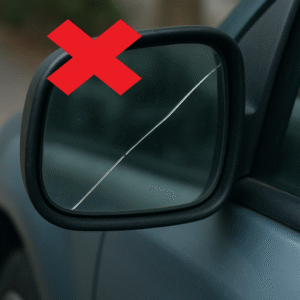
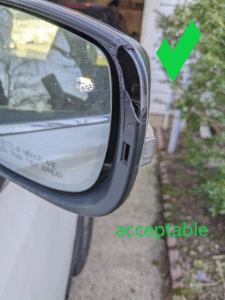
Mirrors – all mirrors must be intact. Cracked mirror glass will fail. A cracked mirror casing is acceptable as long as there are no sharp edges. If the mirror casing contains an indicator light, the casing cannot be damaged.
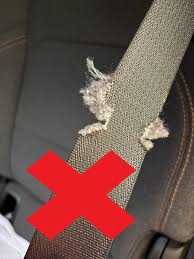
Seat belts – all seat belts must work, retract properly, and be free from fraying or damage. Slightly slow retraction is acceptable.
Seats – all seats must be fitted as per the vehicle’s original configuration. If seats have been removed, the car requires a Queensland LK1 modification plate to reflect the changed seating capacity (see modification plates section below).
Driver’s seat adjustment – the driver’s seat must be adjustable. If the adjustment mechanism is broken, it will fail.
Door handles – all interior and exterior door handles must open correctly.
Boot or rear door – on wagons, vans, SUVs and hatchbacks, the rear door or boot must stay open on its own without falling down.
Lights – all lights must work, including headlights (low beam, high beam, park lights), tail lights, brake lights, indicators, side indicators (often built into the mirrors), number plate lights and reverse lights. Aftermarket tint on any light is not allowed. Light housings must be free of holes and moisture.
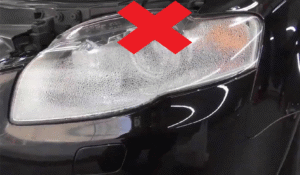
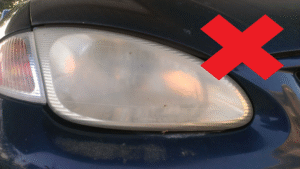
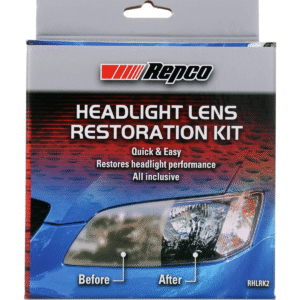
Headlights – must be clear and not heavily faded. Cracked or heavily faded headlights will fail. Light fading can be fixed with cutting polish. For heavy fading, headlight restoration kits are available from auto parts stores.
Battery – must be securely mounted with clamps or a strap. A loose battery will fail.
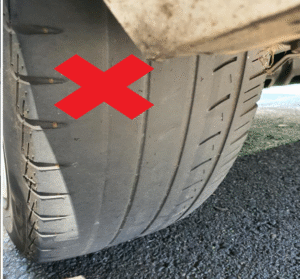
Tyres – minimum 1.5mm tread depth. Bald or worn tyres are the single most common reason cars fail a roadworthy. Tyres on each axle must be the same size – both front tyres must match, both rear tyres must match. Different brands are fine. Different sizes front to rear are also fine. The spare tyre is not checked during a roadworthy inspection. If you have aftermarket wheels, make sure the tyres are not rubbing against the body of the car.
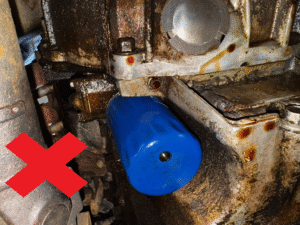
Oil leaks – I check underneath the car for active oil leaks. If the underbody is oily, the car cannot pass. If an oil leak was recently repaired, make sure the old oil has been cleaned off. Mechanics sometimes fix the leak but leave residual oil behind, which can still cause a fail.
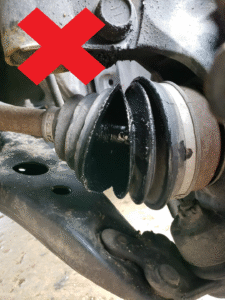
CV boots – split or damaged CV boots will fail.
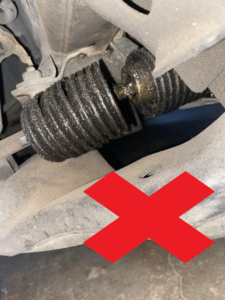
Steering rack boots – damaged steering rack boots will fail.
Shock absorbers – leaking shock absorbers will fail.
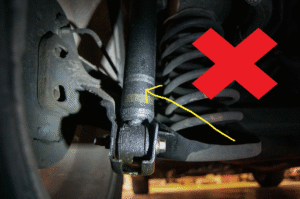
Brakes and park brake – brakes must feel and sound normal during a test drive. The park brake must hold the car securely.
Speedometer – must be working.
The full inspection also covers suspension components, steering components, driveline components, electrical systems, exhaust components, headlight aiming, wheel bearings, body condition, chassis, and frame integrity.
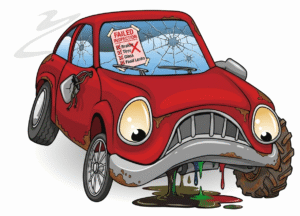
After thousands of car inspections, these are the issues I see most often:
Worn tyres are the number one reason cars fail. Many people don’t realise their tread is below the 1.5mm legal minimum. Check your tyres before booking – it’s a simple fix that saves you a re-inspection fee.
Dashboard warning lights are the second most common fail point. If any orange warning light is on when the engine is running, the car cannot pass. Common culprits are the engine light, ABS light, and airbag light. Get these diagnosed and cleared before your inspection.
Worn windscreen wipers are cheap and easy to replace, but they catch people out all the time. If your wipers leave streaks, replace them. Auto parts stores can fit them for you in minutes.
Non-working lights are another simple fix that causes unnecessary fails. Walk around your car and check every light – headlights, tail lights, brake lights, indicators, number plate lights. Replace any blown globes before your inspection.
Oil leaks underneath the car will fail the inspection. Check your usual parking spot for oil stains on the ground. If you see any, have the leak repaired and the underbody cleaned before booking.
This is something I see regularly, especially on 4WDs and vans. If seats have been removed from your vehicle, the seating capacity no longer matches what’s listed on the compliance plate or the RAV/ROVER record (vehicles manufactured after 2022 may not have a physical compliance plate – they have a digital RAV record instead).
In Queensland, the seating capacity of the vehicle must match the compliance plate or RAV record. If it doesn’t, the vehicle needs a Queensland LK1 modification plate to reflect the new seating capacity. Without this plate, the car cannot pass a roadworthy inspection.
Important – modification plates from other states are not valid for Queensland registration. You need a Queensland-issued LK1 plate.
I can issue LK1 modification plates for seating capacity changes at a cost of $250 on top of the roadworthy inspection fee. This covers the documentation and plate for the changed seating capacity.
I do not issue modification plates for engine modifications, suspension modifications, or other types of vehicle modifications. If you need a mod plate for something other than seating capacity, you will need a different provider.
If you’re unsure whether your vehicle needs a modification plate, send me a photo of the interior and I’ll let you know before you book.
Since most people getting a car roadworthy are selling their car, here are some tips from seeing thousands of car sales.
Clean the car thoroughly. A clean car sells faster and for more money. Buyers associate a dirty car with poor mechanical care. Depending on the value and condition of your car, professional detailing can be worth the investment – the cost usually comes back through a higher sale price.
Take good photos. Photos sell cars more than descriptions do. Photograph every angle, the interior, and close-up details. Don’t hide cosmetic damage – the buyer will see it in person anyway and may walk away feeling misled.
Get the roadworthy certificate before listing. As mentioned above, having the certificate ready makes your car more attractive to buyers and avoids the stress of failing after a sale is agreed.
Gather your documents. Have the logbook, service records, repair receipts, and roadworthy certificate ready. Buyers feel more confident purchasing from a seller who has everything organised.
List with a good description including the year, make, model, mileage, transmission type, overall condition, service history, registration status, extras and aftermarket parts, and any known issues. Mention that the roadworthy certificate is ready.
List on Facebook Marketplace for local reach. Consider Carsales as well for more expensive or specialised vehicles – it costs more but tends to attract more serious buyers.
Be careful with scammers. Never hand over the vehicle before the full payment has cleared in your bank account. Do not trust screenshots or receipts – wait for the actual funds. Never pay for additional “checks” requested by a buyer – legitimate buyers arrange and pay for their own pre-purchase inspections.

One-man service – you deal with me from booking to certificate. No call centres, no random inspectors.
On-time guarantee – if I’m late, your inspection is half price or free.
No upselling – I don’t offer repairs. My only job is to give you an honest inspection.
Mobile service – I come to your home or work. No need to drop your car at a workshop and wait around.
Over 10,000 inspections completed – cars, motorcycles and trailers. I know what to look for and I don’t waste your time.
220+ five-star Google reviews – from real customers across Brisbane, Logan and Redlands.
Choose a time frame and location that works for you. You’ll get instant confirmation.
I’ll call you when I’m on the way. On arrival, all I need is the key. The inspection takes about 30 minutes.
If your car meets Queensland safety requirements, I issue your safety certificate on the spot. If it doesn’t pass, you’ll get a clear report explaining what needs fixing.
A car roadworthy inspection with Local Roadworthys starts at $110 when booked online. Priority bookings with a 2-hour time window are $140. Phone bookings are $10 more.
Yes. In Queensland, the seller must provide a valid safety certificate (roadworthy certificate) before ownership can be transferred to the buyer.
A safety certificate is valid for 2 months or 2,000 kilometres, whichever comes first. For licensed dealers, it’s 3 months or 1,000 kilometres.
You’ll receive a clear report listing exactly what needs to be fixed. Once repairs are done, book a re-inspection (from $60) within 14 days.
The most common fail points are worn tyres, dashboard warning lights, worn windscreen wipers, non-working lights, and oil leaks.
I inspect all cars up to 4.5 tonnes GVM, including sedans, hatchbacks, SUVs, utes, vans and 4WDs.
Yes. Since I come to you, there’s no need to drive an unregistered car anywhere. I inspect it wherever it is.
Only if the seating capacity matches the compliance plate or RAV record, or if the vehicle has a Queensland LK1 modification plate. I can issue LK1 mod plates for seating capacity changes for $250. Mod plates from other states are not valid for QLD registration.
No. Air conditioning is not part of the roadworthy inspection. However, the interior blower fan must work and must be able to demist the front windscreen.
No. The rear wiper and rear washer are not checked during a roadworthy inspection. Only the front wipers and washer are required.
I service South Brisbane, Logan, Redlands and surrounding areas including Capalaba, Cleveland, Victoria Point, Springwood, Beenleigh, Carindale, Mount Gravatt, and many more suburbs. Check the booking page for availability in your area.
Book online for the best price and instant confirmation. I’ll come to you, inspect your car, and if it passes, you’ll have your certificate the same day.
Don’t risk failing your inspection for something simple. This checklist reveals the most common fail points and gives you easy-to-follow steps to make sure your car, motorcycle, or trailer is ready for inspection. + Bonus: How to sell your vehicle for a good price quick.
Lorem ipsum dolor sit amet, consectetur adipiscing elit. Ut elit tellus, luctus nec ullamcorper mattis, pulvinar dapibus leo.