Do Electric Cars Need a Roadworthy in Queensland?


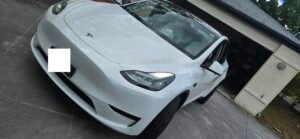
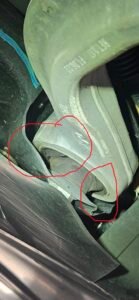
I inspected this Tesla Model 3 in Slacks Creek today. It failed for a cracked front control arm bush – you can see the damaged bush in the second photo. The owner was surprised because the car is relatively new and has only 39000 km. But electric cars have their own set of common issues that catch owners off guard.
First, the simple answer to the question.
Yes - same rules as any other car
Electric cars, hybrid cars, and plug-in hybrids all need a roadworthy certificate in Queensland under the exact same rules as petrol or diesel cars. If you’re selling, transferring ownership, or registering the vehicle, you need a safety certificate. There’s no exemption for electric vehicles.
The inspection process is the same too. I check tyres, brakes, suspension, steering, lights, windscreen, mirrors, seat belts, warning lights, oil leaks (yes, electric cars can still have fluid leaks from cooling systems and drive units), and everything else on the standard checklist.
What about the battery?
Battery health is not part of a roadworthy inspection. I don’t test the battery capacity, the range, or the degradation level. As long as the car drives normally and there are no fault codes on the dashboard, the battery is not a factor in the roadworthy.
This is important to understand if you’re buying a used electric car. A roadworthy certificate tells you the car meets minimum safety standards. It does not tell you anything about the condition of the battery, the remaining range, or how long the battery will last. If you’re buying a used EV and want to know the battery condition, that’s something a pre-purchase inspection or a specialist EV diagnostic can help with – but it’s outside the scope of a roadworthy.
Common issues I see on electric cars
Electric cars don’t have engines, exhaust systems, or traditional transmissions – so those fail points don’t exist. But they have their own set of problems.
Worn tyres are the most common issue. Electric cars produce maximum torque instantly, which is hard on tyres. Rear tyres on performance EVs wear significantly faster than on equivalent petrol cars. I see a lot of electric cars come in with rear tyres below the 1.5mm minimum while the fronts still look fine.
Cracked control arm bushes come up regularly on certain models. The weight of the battery pack puts extra stress on the suspension components. The Tesla in today’s inspection failed for exactly this – a cracked front control arm bush on a car that otherwise looked immaculate.
Leaking suspension is another one I see on some models. The dampers can develop leaks, which is the same fail point as on any car but seems to appear earlier on heavier EVs due to the battery weight.
Door components not working properly is something I encounter on certain models with electronic door mechanisms. If a car has electronically operated doors, every door must open and close properly – from both inside and outside. This is a safety requirement. In an emergency, passengers need to get out of the car quickly, and people outside need to be able to open the doors to rescue anyone trapped inside. Doors that don’t fully open, that fall closed on their own, or that have switches not responding are all fail points.
Dashboard warning lights apply to electric cars just like any other car. If any orange warning light stays on while the car is running, it fails.

A roadworthy is a basic safety check - not a condition report
Whether the car is electric, petrol, or diesel, a roadworthy only confirms the vehicle meets minimum safety standards. It doesn’t tell you about overall condition, battery health, potential future problems, or whether the car is worth the asking price.
If you’re buying a used electric car and want a thorough assessment beyond just safety, consider a pre-purchase inspection. This covers everything in a roadworthy plus the general mechanical and electrical condition of the vehicle. Local Roadworthys offers mobile pre-purchase inspections from $200.