Engine Mounts - A Common Roadworthy Fail Point on Mitsubishi Lancers

I inspected this Mitsubishi Lancer in Meadowbrook today. The engine mounts were fine on this one and it passed. But if you’re selling a Mitsubishi Lancer – or any Mitsubishi for that matter – engine mounts are the first thing I check because they fail so frequently on these cars.

What is an engine mount?

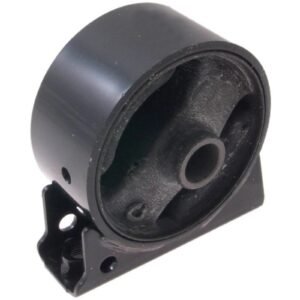
An engine mount is a rubber and metal component that holds the engine in place and connects it to the chassis of the car. Most cars have a front mount, a rear mount, and sometimes side mounts. The rubber absorbs vibration from the engine so you don’t feel it in the cabin while driving.

Over time, the rubber in the mount deteriorates, cracks, and eventually separates. When this happens, the engine is no longer held securely and can move around more than it should.

Why Mitsubishi models are known for this

Worn engine mounts are a common issue across many Mitsubishi models, but especially on the Lancer. The rubber in the mounts seems to deteriorate faster than on some other brands. I see cracked and collapsed engine mounts on Lancers more often than on almost any other car.

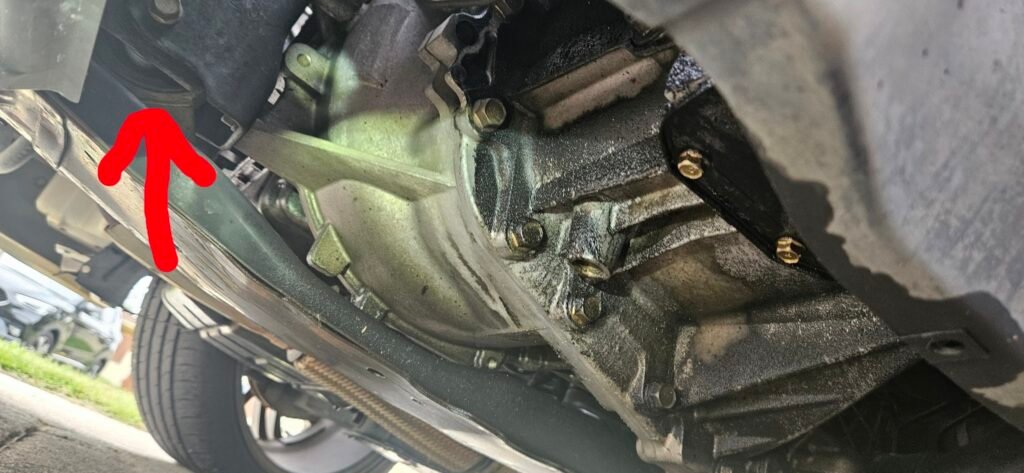
In the underbody photo, you can see where the front engine mount sits – I’ve marked it with an arrow. This is one of the areas I always look at closely on a Mitsubishi.

What happens when engine mounts fail?

A worn or broken engine mount allows the engine to shift position. This causes several problems:

Excessive vibration through the car, especially at idle. If you feel the steering wheel or the whole cabin vibrating more than usual, worn mounts could be the cause.

Clunking or banging noises when accelerating, braking, or going over bumps. The engine physically moves and hits surrounding components.

Strain on other components. When the engine shifts, it pulls on hoses, wiring, exhaust connections, and the transmission. This can lead to secondary problems that cost more to fix than the mounts themselves.

In severe cases, a completely collapsed mount can allow the engine to drop enough to contact the subframe or other underbody components. At that point it’s not just a roadworthy fail – it’s a breakdown waiting to happen.

How I check engine mounts during a roadworthy

I look at the mounts from underneath the car for visible cracks, separation, or collapse of the rubber. I also check for excessive engine movement – if the engine rocks or shifts significantly when revved or when put into gear, the mounts are likely worn.

On this Lancer in Meadowbrook, the mounts were in good condition. The underbody was slightly greasy around the engine area, but there was no evidence of oil dripping onto the ground, exhaust, or brakes. A slightly oily engine can pass a roadworthy – the engine doesn’t have to be bone dry. What fails is active dripping, oil on the exhaust (fire risk), or oil on the brakes (safety risk).

Oil leaks vs oily engine - what's the difference?

This is a question I get regularly. An engine that looks a bit greasy or has a film of oil on it is not the same as an active oil leak.

An oily engine with no drips – can pass. As long as there’s no oil dripping onto the ground, onto the exhaust system, or onto the brakes, a general film of oil or grease on the engine is acceptable.

Oil dripping from the engine – fails. If I can see drops of oil hanging from the engine, collecting on components below, or dripping onto the ground, that’s an active leak and it’s a fail.

Oil on the exhaust – fails. Oil on a hot exhaust is a fire hazard.

Oil on the brakes – fails. Oil on brake components destroys braking performance.

If you’ve recently had an oil leak repaired, make sure the old oil has been cleaned off the engine and underbody. I see this regularly – the leak is fixed but the residual oil is still there, and I can’t tell if the leak is still active or not.


Need a roadworthy? I come to you in Meadowbrook, Logan, Redlands and South Brisbane. From $110.

Lets get my roadworthy sorted.

Free Roadworthy Preparation Guide and Checklist

Roadworthy Checklist: Get Your Vehicle Passed the First Time

Don’t risk failing your inspection for something simple. This checklist reveals the most common fail points and gives you easy-to-follow steps to make sure your car, motorcycle, or trailer is ready for inspection. + Bonus: How to sell your vehicle for a good price quick.

Free [x]

Lead Magnet Title Goes Here

Lorem ipsum dolor sit amet, consectetur adipiscing elit. Ut elit tellus, luctus nec ullamcorper mattis, pulvinar dapibus leo.