
220+ Five Star Reviews & Counting
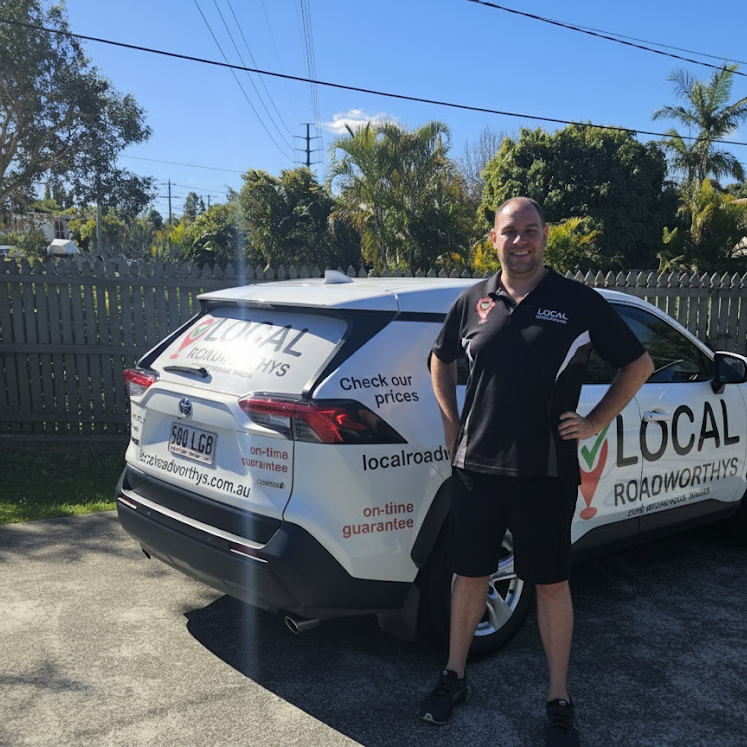
Need a roadworthy certificate for your trailer? I’m Dom, a licensed Queensland safety certificate inspector with over 10,000 vehicle inspections completed. I come to your home, work, or wherever your trailer is located. The inspection typically takes about 20 minutes, and if your trailer passes, you get the certificate on the spot.
I inspect all types of light trailers with an ATM (Aggregate Trailer Mass) between 751kg and 4,500kg – including boat trailers, box trailers, car trailers, flatbed trailers and enclosed trailers.
I only inspect – I don’t do repairs. No conflict of interest, no pressure to buy anything. Just an honest inspection.
I inspect cars, motorcycles and trailers, in South Brisbane, Logan and Redlands and northern Gold Coast suburbs.
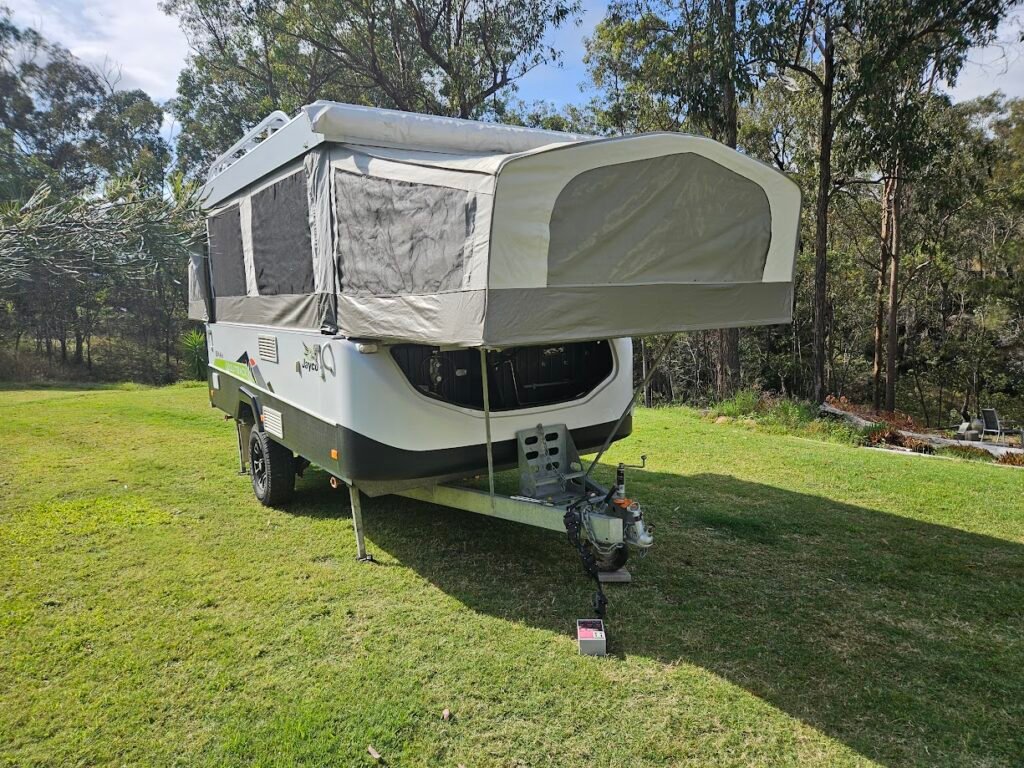
I do standard trailer roadworthy inspections (safety certificates) only. I do NOT offer the following services:
HVRAS inspections or measurements – if your trailer requires a HVRAS certificate, you can it done for free at certain TMR customer service centres
Gas certificate inspections – if your caravan or food trailer needs a gas compliance certificate, I cannot help with that.
Not every trailer requires a roadworthy certificate in Queensland. Here’s the simple rule:
Trailers with an ATM of 750kg or less do NOT need a roadworthy certificate. You can sell, transfer ownership, or register without one.
Trailers with an ATM of 751kg or more DO need a roadworthy certificate for sale, transfer of ownership, or re-registration.
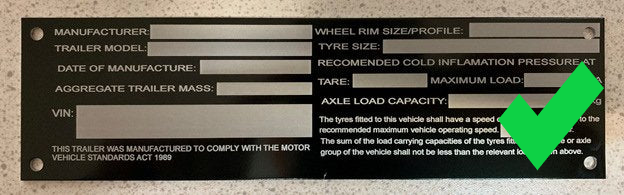
You can find your trailer’s ATM on the compliance plate, which is usually located on the drawbar at the front of the trailer. If you’re not sure whether your trailer needs one, send me a photo of the compliance plate and I’ll let you know. A online rego check does NOT show the ATM! Please look on the compliance plate only.
All prices include GST. No hidden fees, no card surcharges.
Book Online (recommended):
Book Over the Phone:
Re-inspections (within 2 weeks if your trailer didn’t pass): from $60.
Some areas are slightly higher – the booking page shows the exact price for your suburb.
A trailer roadworthy inspection in Queensland covers all safety-critical components. Here’s what I check:
Compliance plate – required on trailers built after 1989. It must be present and readable. A missing or unreadable compliance plate is one of the most common reasons trailers fail. It’s usually found on the drawbar at the front.
VIN number – must be clearly marked on the trailer and match the registration records.
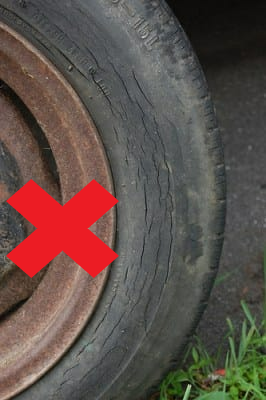
Tyres – minimum 1.5mm tread depth and no cracks. Old, cracked tyres are a very common fail point, especially on trailers that sit unused for long periods.
Lights — all lights must work, including indicators, brake lights, tail lights and number plate light. You’ll need to connect the trailer to a vehicle so I can test them.
Brakes – if your trailer has brakes, they must be functioning correctly. On boat trailers in particular, corroded brake rotors and pads are a frequent issue due to saltwater exposure.
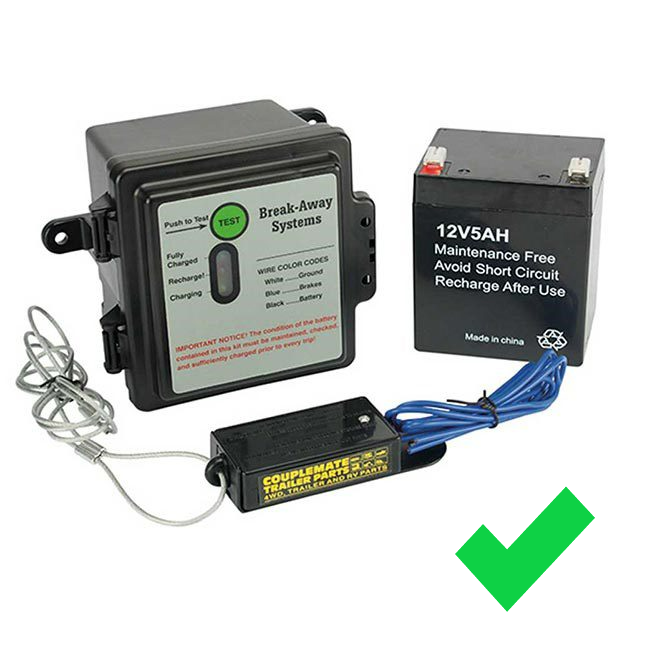
Breakaway brake system – mandatory on trailers with a GTM of 2 tonnes or more. This battery-operated emergency system applies the brakes if the trailer disconnects from the towing vehicle. The battery must be charged.
Wheel bearings – must be in good condition with no excessive play.
Suspension – all components checked for wear, damage or failure.
Chassis and body – inspected for structural damage, excessive rust, or cracks.
Coupling and safety chains – must be in good working order and correctly rated for the trailer.
After thousands of inspections, these are the trailer issues I see most often:
Missing or unreadable compliance plates are the number one headache. If your trailer was built after 1989 and the plate is gone or too corroded to read, it will fail. Replacing a compliance plate can be a process, so check this before you book.
Corroded brakes on boat trailers are extremely common. Saltwater destroys brake rotors and pads over time. If you regularly launch your boat trailer in saltwater, have the brakes checked before your inspection.
Old cracked tyres fail trailers constantly. Many trailers sit in a yard for months or years between uses. Even if the tread looks fine, rubber deteriorates with age and UV exposure. Cracked sidewalls will fail.
Broken or non-working lights are an easy fix but catch people out often. Test all your trailer lights by connecting to a vehicle before your inspection. Replace any blown globes.
Faulty brakes beyond just corrosion – seized brakes, disconnected brake lines, or a flat breakaway battery on trailers over 2t GTM will all fail.
Boat trailers are one of the most common trailer types I inspect. They come with their own set of challenges – mainly because of saltwater exposure. Corroded brakes, seized components, and deteriorated wiring are all things I see regularly on boat trailers.
If you’re selling a boat and trailer package, the trailer needs its own separate roadworthy certificate if it’s over 750kg ATM. The boat itself does not require a roadworthy, but the trailer does.
Before booking your boat trailer roadworthy, make sure you can connect the trailer to a vehicle so I can test the lights and brakes. Also check that the compliance plate is present and readable – saltwater can make these very hard to read over time.
If you’ve looked at your trailer’s compliance plate, you’ve probably seen the terms ATM and GTM. They’re easy to mix up, but they mean different things.
ATM stands for Aggregate Trailer Mass. This is the total weight of the trailer plus its maximum load while the trailer is standing on its own – not connected to a vehicle. ATM is the number used to determine whether your trailer requires a roadworthy certificate in Queensland (751kg ATM or more = roadworthy required).
GTM stands for Gross Trailer Mass. This is the total weight that the trailer’s axles carry when the trailer is fully loaded and connected to the tow vehicle. Because some of the trailer’s weight transfers forward through the coupling to the tow vehicle, GTM is always lower than ATM.
Tare Weight is simply the weight of the trailer when it’s completely empty – no load at all.
All trailers manufactured after August 1989 are required to have a compliance plate showing the ATM. Some plates also display the GTM and tare weight. Older trailers built before 1989 may not have a compliance plate at all, which can complicate the roadworthy process.
If you’re unsure about your trailer’s weights or whether it needs a roadworthy, send me a photo of the compliance plate and I’ll tell you.
Not all trailers are required to have brakes. Whether your trailer needs a braking system – and what type – depends on its weight.
No brakes required: Single-axle trailers with a GTM of 750kg or less do not need any braking system.
Brakes on at least one axle: Trailers with a GTM between 751kg and 2,000kg must have brakes fitted to at least one axle. Override (mechanical) brakes are permitted in this weight range. These use the forward momentum of the trailer pushing against the coupling to mechanically activate the drum brakes.
Electronic brakes required: Trailers with a GTM over 2,000kg must have an electronic braking system. Electronic brakes are controlled by a brake controller unit installed in the tow vehicle. The driver can apply them automatically or manually. If you’re setting up electronic brakes, you’ll need a compatible brake controller in your tow vehicle.
Breakaway system required: Trailers with a GTM over 2,000kg must also have a breakaway brake system. This is a battery-powered emergency system that automatically applies the trailer’s brakes if the trailer separates from the tow vehicle while driving. The battery must be charged and the system must be functional for the trailer to pass a roadworthy inspection.
Safety chain requirements are based on ATM: Trailers up to 2,500kg ATM need at least one safety chain. Trailers between 2,500kg and 3,500kg ATM need two safety chains rated to 3,500kg. Trailers over 3,500kg ATM need two chains made from high-strength steel where each chain’s breaking load exceeds the trailer’s ATM.
If your trailer uses a brake controller (the unit that sits in the tow vehicle and controls the trailer’s brakes), you need to have the trailer connected to the vehicle with the brake controller before I arrive for the inspection.
For simple brake systems – mechanical or basic electric without a brake controller – the trailer can stay disconnected during the inspection.
For advanced brake systems that rely on a brake controller – especially hydraulic brake setups – I need to be able to verify the brakes are actually working. That means the trailer must be hooked up to the tow vehicle with the correct brake controller connected and operational.
Every brake controller setup is slightly different. In rare cases, if the trailer isn’t connected to the right vehicle with the right controller, I won’t be able to confirm the brakes function correctly – which means the trailer fails the inspection. This is easily avoided by having everything connected before I arrive.
If you’re unsure whether your setup needs to be connected, just ask me when you book and I’ll let you know.
One-man service — you deal with me from booking to certificate. No call centres, no random inspectors.
On-time guarantee — if I’m late, your inspection is half price or free.
No upselling — I don’t offer repairs. My only job is to give you an honest inspection.
Mobile service – I come to wherever your trailer is. No need to tow it anywhere.
Over 10,000 inspections completed – cars, motorcycles and trailers. I know what to look for.
220+ five-star Google reviews – from real customers across Brisbane, Logan and Redlands.
A trailer roadworthy inspection with Local Roadworthys starts at $110 when booked online. Priority bookings with a 2-hour time window are $140. Phone bookings are $10 more.
Only trailers with an ATM (Aggregate Trailer Mass) of 751kg or more require a roadworthy certificate in Queensland. Trailers with an ATM of 750kg or less are exempt.
No. I provide standard trailer roadworthy inspections (safety certificates) only. If your trailer requires a HVRAS certificate or measurement, you can get it free at certain TMR customer service centres.
No. I do not offer gas compliance inspections. If your caravan or food trailer needs a gas certificate, I can not help with that. Gas certificates are usually done by plumbers.
Yes. Boat trailers are one of the most common trailer types I inspect. Make sure you can connect the trailer to a vehicle for the inspection so I can test lights and brakes.
I inspect light trailers with an ATM between 751kg and 4,500kg. This includes boat trailers, box trailers, car trailers, flatbed trailers and enclosed trailers.
A safety certificate is valid for 2 months or 2,000 kilometres, whichever comes first. For licensed dealers, it’s 3 months or 1,000 kilometres.
You’ll receive a clear report listing what needs to be fixed. Once repairs are done, book a re-inspection (from $60) within 14 days.
I service South Brisbane, Logan, Redlands and surrounding areas including Capalaba, Cleveland, Victoria Point, Springwood, Beenleigh, Carindale, Mount Gravatt, and many more. Check the booking page for availability in your suburb.
Book online for the best price and instant confirmation. I’ll come to you, inspect your trailer, and if it passes, you’ll have your certificate the same day.
Don’t risk failing your inspection for something simple. This checklist reveals the most common fail points and gives you easy-to-follow steps to make sure your car, motorcycle, or trailer is ready for inspection. + Bonus: How to sell your vehicle for a good price quick.
Lorem ipsum dolor sit amet, consectetur adipiscing elit. Ut elit tellus, luctus nec ullamcorper mattis, pulvinar dapibus leo.