
Window Tint Roadworthy Rules in Queensland
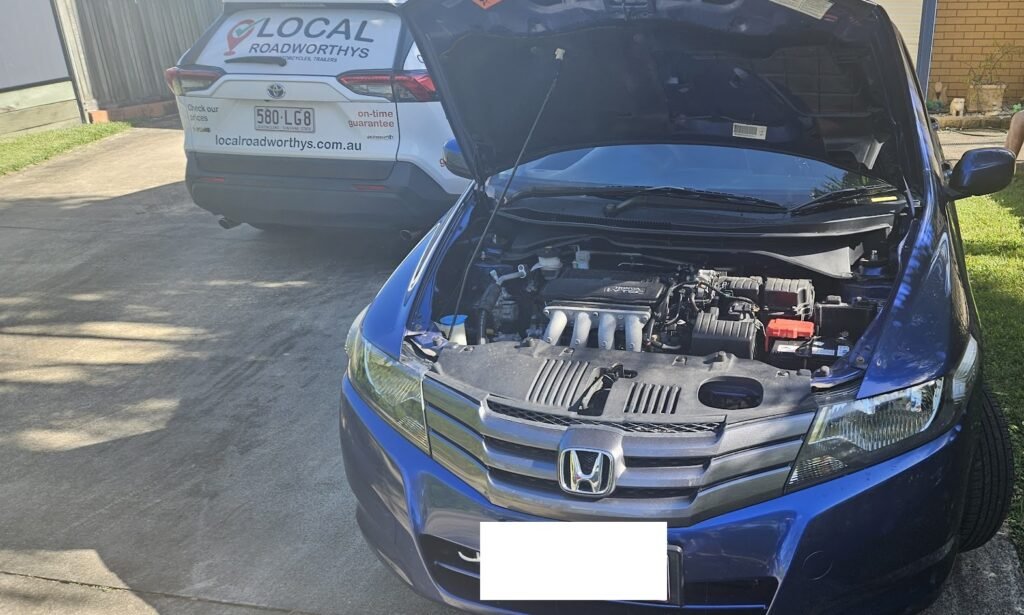
I inspected this Honda City in Logan Central today. It had a light window tint applied – perfect for blocking the Queensland sun while still maintaining good visibility in dark conditions. No issues at all. But window tint is a topic that comes up constantly, so here’s what you need to know.
The legal tint limits in Queensland
Window tint is measured by light transmittance – how much light passes through the glass. A higher percentage means more light gets through and the tint is lighter. A lower percentage means less light and a darker tint.
The rules are different depending on the window position:
Front windscreen – no aftermarket tint is allowed on the windscreen below the top section. Tint is only permitted on the upper portion of the windscreen, and it must not extend lower than either the horizontal line touching the top of the area wiped by the windscreen wipers, or the upper 10% of the windscreen – whichever is less.
Windows in front of the driver’s position (front side windows) – must have a light transmittance of at least 35%. That means at least 35% of light must pass through. Anything darker than this fails.
Windows behind the driver’s position (rear side windows and rear windscreen) – must have a light transmittance of at least 20%. This allows for a darker tint behind the driver than in front.
Some vehicles may have specific manufacturer approvals for different tint levels, but for most cars these are the limits.
What fails a roadworthy
Tint that is too dark for the window position is an obvious fail. But darkness isn’t the only issue. I also check for:
Bubbling or peeling tint. If the tint film is lifting, bubbling, or peeling, the window is not clear and it fails. Old tint that has deteriorated needs to be removed or replaced.
Blurry or hazy tint. Over time, cheap tint can become hazy or discoloured. If you can’t see clearly through the window, it fails.
Purple or discoloured tint. Old tint often turns purple as the dye breaks down. If it’s affecting visibility, it fails.
If your tint is bubbling, peeling, or discoloured, the cheapest fix is often to just strip it off entirely. You can remove window tint yourself with a heat gun or hair dryer, a razor blade, and some patience. Or any tint shop can strip it for you.
Why too-dark tint is a bigger problem than just a failed roadworthy
This is something most people don’t think about. If you’re involved in an accident and your window tint is darker than the legal limit, it can be used against you – even if the accident wasn’t your fault.
In an investigation, it can be argued that you could have seen the hazard coming and reacted in time if your windows weren’t too dark. If your visibility was reduced because of illegal tint, you may be found partially or fully liable for an accident you otherwise could have avoided.
Insurance companies look for any reason to reduce or deny a claim. Illegal window tint gives them exactly that. Dark tint that makes your car look cool can end up costing you thousands if something goes wrong.
How to check your tint before a roadworthy
If you’re unsure whether your tint is within the legal limits, a tint shop can measure the light transmittance with a meter in seconds. It’s usually free or very cheap.
As a rough guide – if you can clearly see inside the car through the front side windows during the day, it’s probably within the 35% limit. If the windows look almost black from outside and you can barely see in, it’s likely too dark.
For the rear windows, the 20% limit is more generous, so darker tint is allowed behind the driver. Most factory-fitted rear privacy glass is within this limit.
A quick note on good tint
Not all tint is bad. A quality tint within the legal limits is actually a great idea in Queensland. It reduces heat inside the car, protects the interior from UV damage, reduces glare, and makes driving more comfortable. This Honda City had exactly that – a sensible, legal tint that does the job without causing problems. The car was owned by an older gentleman who had clearly taken excellent care of it. Whoever buys this car is getting a well-maintained vehicle.
Not all tint is equal - quality matters
One thing I’ve noticed after thousands of inspections is that there are huge differences in tint quality. Some tint looks very dark from the outside but when measured with a calibrated light meter, it’s within the legal transmittance limits. Other tint doesn’t look particularly dark but actually fails to meet the legal requirements when measured.
The difference comes down to the quality of the film. Cheap tint blocks light inefficiently – it needs to be very dark to achieve the same heat and UV rejection that quality tint achieves while still letting enough light through. Good quality tint can look darker to the eye while still passing the legal limits because it’s designed to reject heat and UV without blocking as much visible light.
If I were getting a car tinted, I would always choose quality tint from a reputable shop rather than going by the cheapest price. The money you save on cheap tint can cost you later – either through a failed roadworthy, reduced visibility at night, or an insurance dispute after an accident.
Related: windscreen chips and cracks, cracked side and rear windows and how to prepare your car. Book a mobile roadworthy.